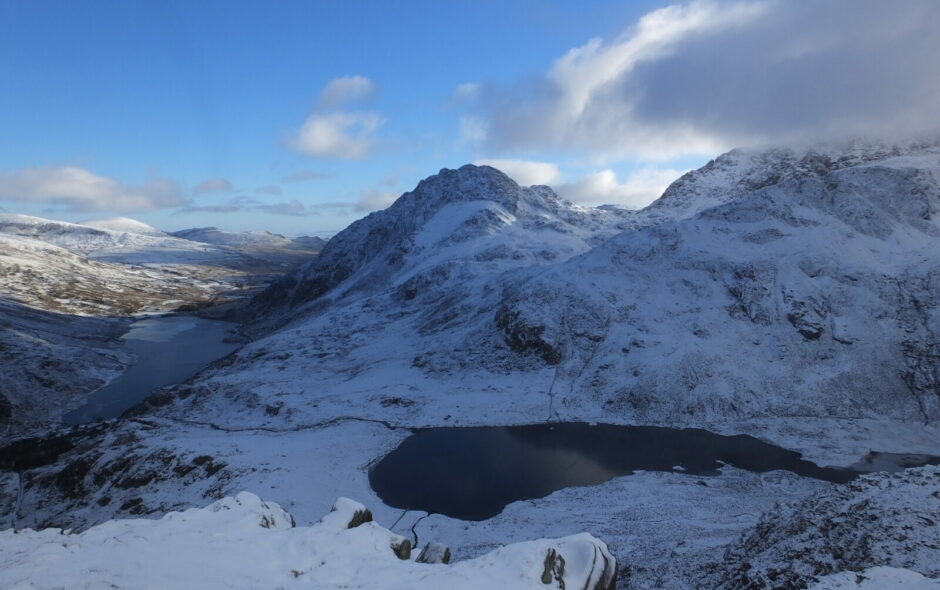
During the Ice Age, a thick layer of ice extended over a wide area of Snowdonia, and smaller glaciers formed when snow was compressed under its weight to form large bodies of moving ice that gravitated down the mountains.
These glaciers accumulated in valleys such as Cwm Idwal, Cwm Cneifion and Cwm Clyd and as they moved down the mountain slopes they scraped stones from the valley headwalls and abraded the valley floors to leave shallow hollows.
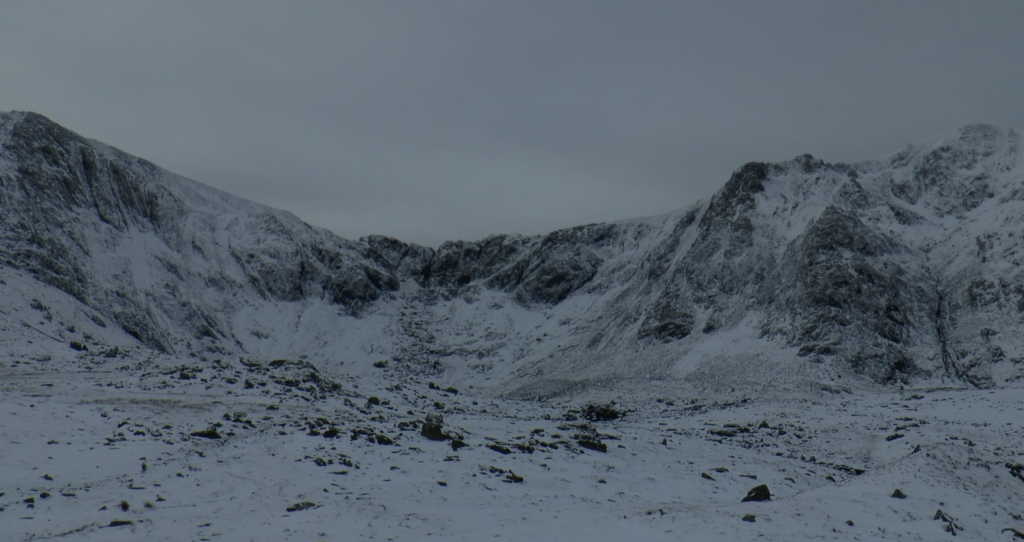
The bowl shape of Cwm Idwal is very typical of a glacial Cwm, with a steep rear and side walls, moraines and a lake. As the glaciers withdrew, debris was deposited in piles that are known as moraines. There are moraines by Llyn Idwal that are known as ‘Beddau Milwyr Ynys Prydain’ (‘The Graves of Isle of Britain Soldiers’), and there is one long moraine that runs along the eastern side of the lake that, along with the hard rock on the Cwm’s northern end, forms the edges of the glacial lake – Llyn Idwal. These landforms are seen in Cwm Idwal today, and are a study subject for many students of all ages.
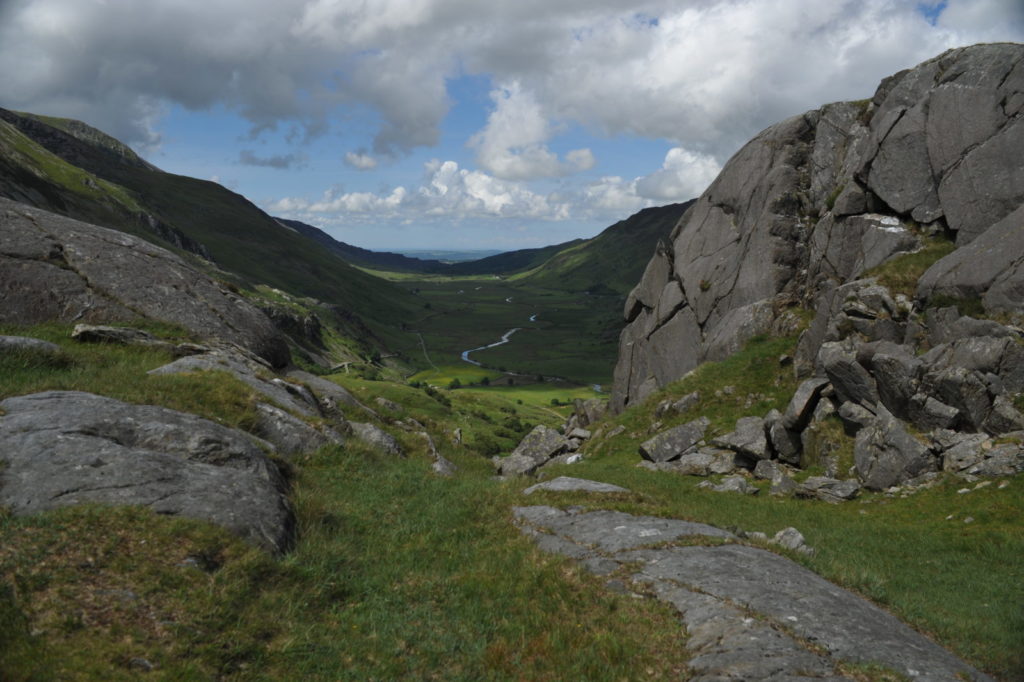
Nant Ffrancon, to the north of Cwm Idwal is an ‘U-shaped’ valley or a classic glacial trough, having a valley with steep sides, a level floor and Afon Ogwen (a misfit river) running down the valley. Other features of glaciation can be seen throughout the area including arêtes, truncated spurs, hanging valleys and glacial deposits.
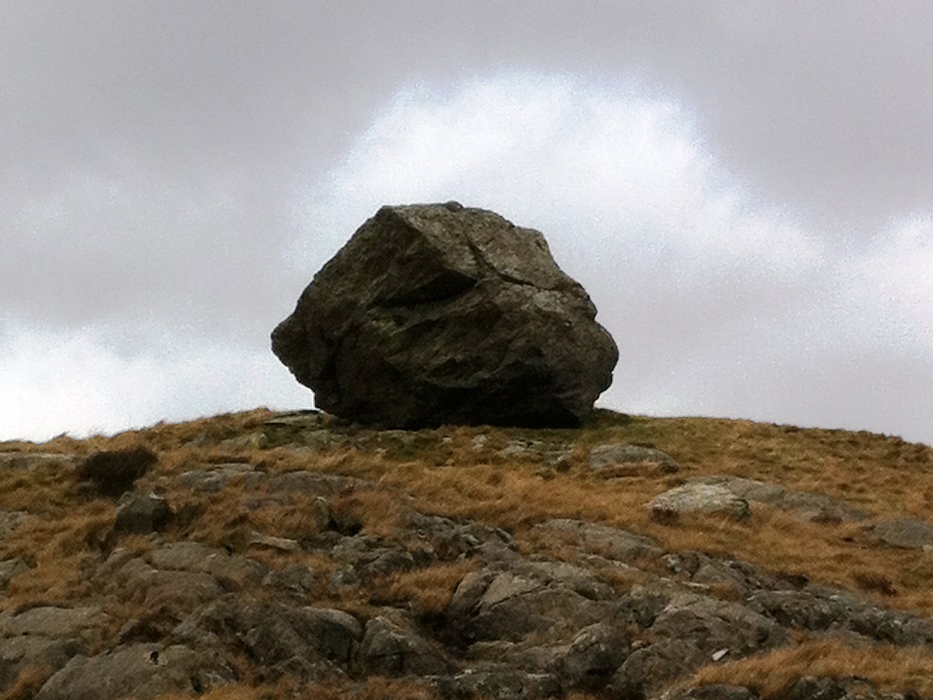
A prominent feature of the landscape of Cwm Idwal is large boulders scattered across the land, sometimes perched on top of small hillocks. These boulders were carried down from the high mountains by the glaciers. At the end of the Ice Age and the glaciers retreated, these boulders that were held within it were left in situ as the ice melted around it. They have remained in place ever since.
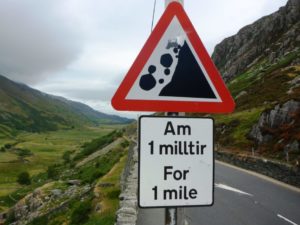
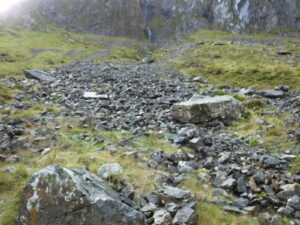
Geographical processes continue to impact the landscape in Cwm Idwal and the surrounding area. The freeze-thaw processes continues to grind the rocks into smaller pieces every year, and landslips can occur on the steepest slopes.
Further Reading: BBC Bitesize – Glaciation
Where next…
Weathering
The rocks are exposed to the elements in several places, especially on the highest slopes…
Cwm Idwal Wildlife
Cwm Idwal National Nature Reserve holds a variety of habitats which sustain a host of…
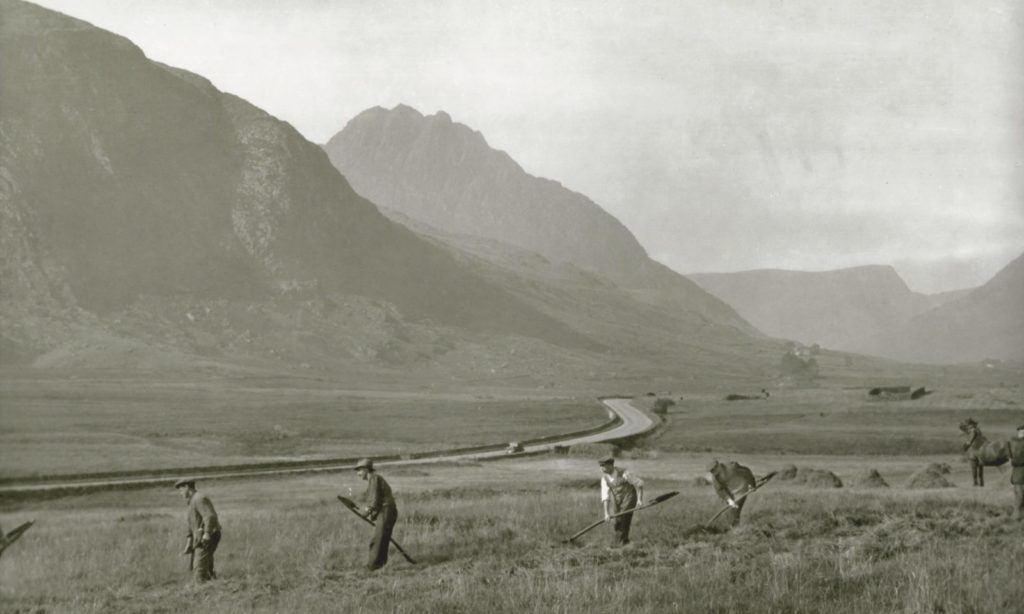
The People of Cwm Idwal
The impacts that people have had on the landscape of Cwm Idwal and the surrounding…
Timeline
450 Million years ago Rocks of Cwm Idwal are formed Volcanic eruptions produce lava, ash…