Arctic-Alpine Plants
There are several remarkable plants in Cwm Idwal, and most of the rarest plants belong to the Arctic-alpine taxon. As is clear from the name ‘Arctic-alpine’, these plants have settled in very cold climates as found in the Arctic, the high mountains of the Alps, and Cwm Idwal.
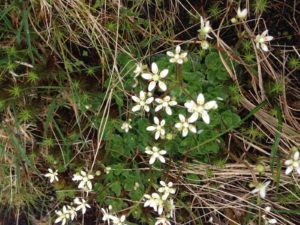
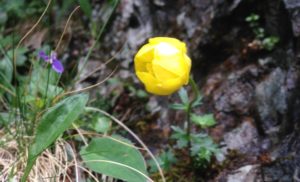
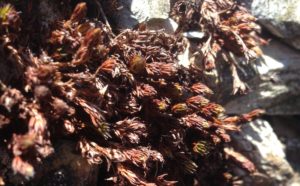
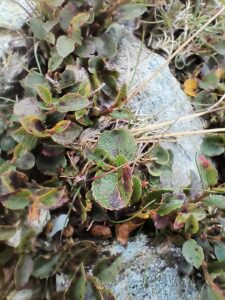
Areas within Cwm Idwal are an ideal habitat for some of these plants, that have adapted perfectly for living in such a place. Among the attributes of Arctic-alpine plants are that these flowering plants grow in low mats or ‘cushions’and they have a short flowering season, which protects them from the extreme elements found in these areas. These plants are usually found growing on high, north east facing ledges, usually above 600m.
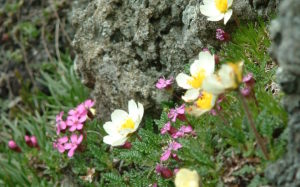
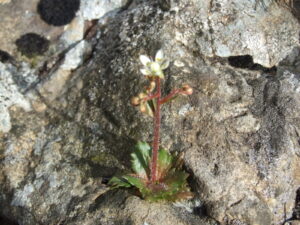
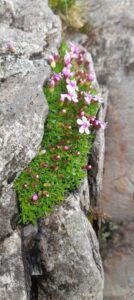
One of the first Arctic-alpine plants to flower in Cwm Idwal is the Purple Saxifrage, or the Opposite-leaved Saxifrage, or to give its Latin name, Saxifraga oppositifolia. The Purple Saxifrage usually flowers from around mid-February through April, but the flowering season changes dependent on the winter weather we have in Cwm Idwal. There is rarely an opportunity to see the Purple Saxifrage flowering after Easter.
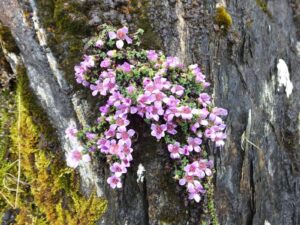
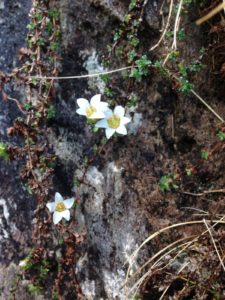
Despite its name, there are also rare varieties of white flowers on the ‘purple’ Saxifrage in Cwm Idwal. The white flower could be the result of a limitation in the genetic pool found in Cwm Idwal. Opposite-leaved Saxifrage is another name for this flower. The leaves grow opposite each other in 4 rows. The tips of the leaves also have white spots, that are a concentration of calcium. A good ID feature.
An Icon of Eryri
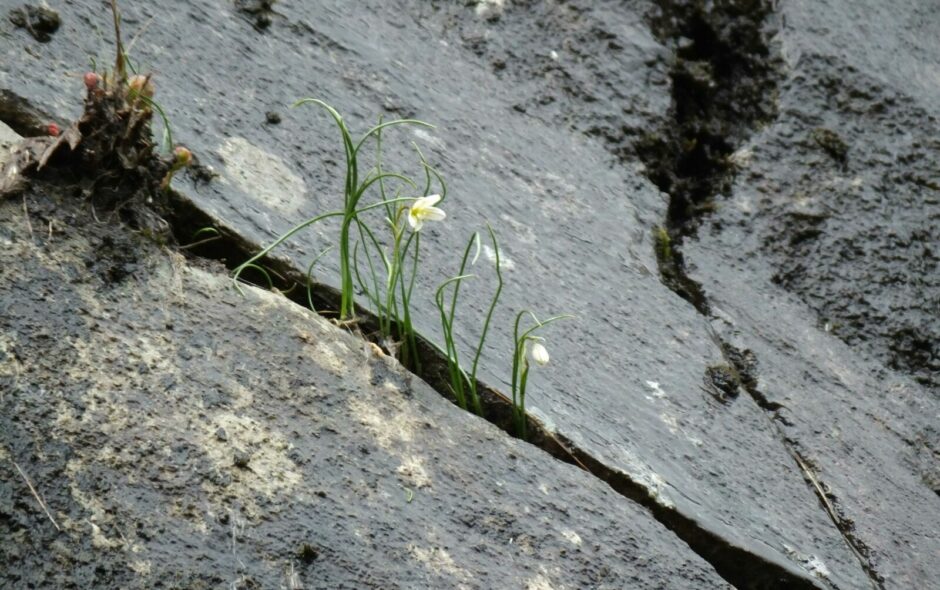
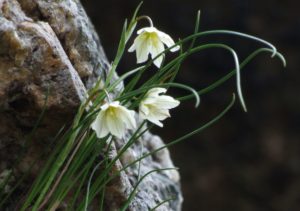
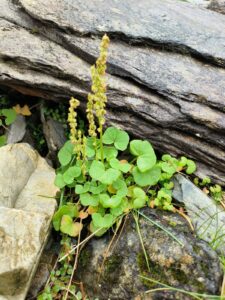
Did you know that Cwm Idwal is home to one of Wales’ most celebrated plants. The Snowdon Lilly grows on the cold and shaded cliffs of Cwm Idwal. It also grows on Yr Wyddfa and on the Carneddau, but isn’t seen anywhere else in the British Isles. The scientific name given to it nowadays is Gagea serotina – but it was originally known as Lloydia serotina in recognition of the pioneering Welsh botanist Edward Llwyd, who recorded the plant in 1688.
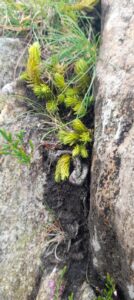
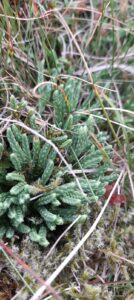
There are many more Arctic-alpine plants growing in Cwm Idwal, they all need cold and shaded conditions to survive here. In fact, these plants have grown in Cwm Idwal for thousands of years, they are relics from the end of the last Ice Age. These plants were common at that time, but have retreated to higher ground as the climate warmed up. Today they are still threatened by a warming climate because of our carbon emissions. Other threats such as over collecting by Victorian botanists and intense grazing during the 20th century have meant that there are very few places where these plants have survived. However work is being undertake to improve the fortunes of these species.



Carnivorous plants
Cwm Idwal is an area where the annual rainfall is comparatively high. When water flows constantly through the soil, it washes the minerals, e.g. Nitrogen, from the acidic soil. Marshy soils are also more acidic, and this limits the number of species that can live here.
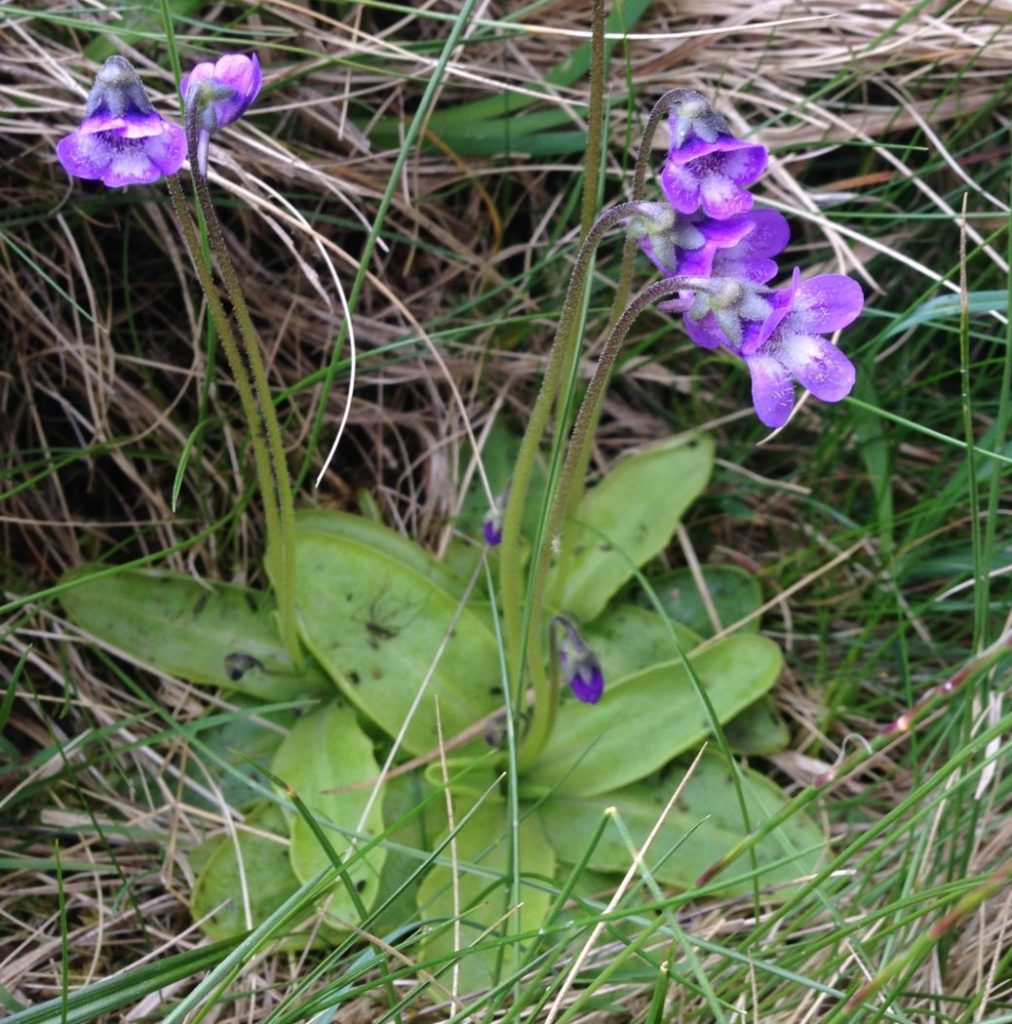
There are two particular plants in Cwm Idwal that have adapted for survival under such circumstances, which are Butterwort (Pinguicula vulgaris), and the round-leaved or common sundew (Drosera rotundifolia). These plants are different from other plants in Cwm Idwal as they trap and digest small insects. The plants have adapted to do this in order to acquire the necessary minerals for growth, flowering and seeding.
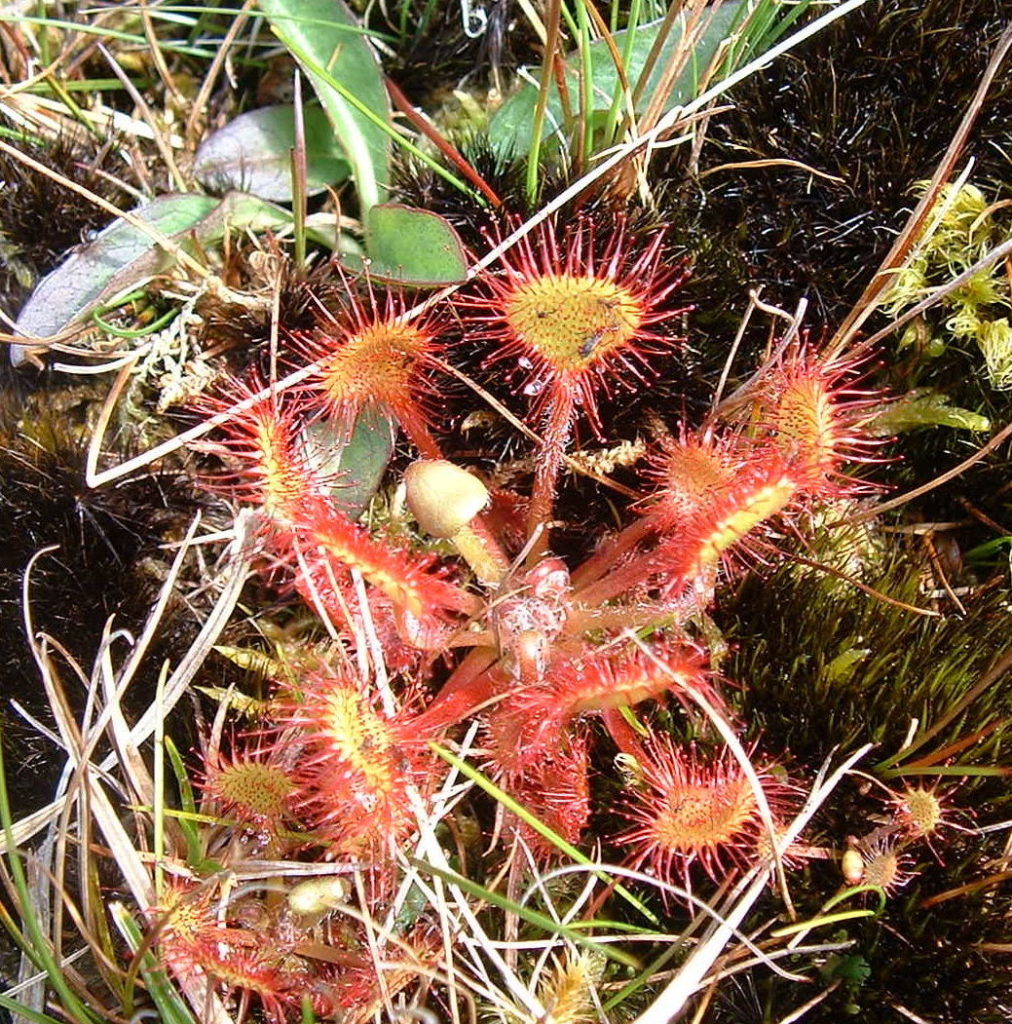
(Drosera rotundifolia)
Where next…

Geology
Cwm Idwal was designated as a National Nature Reserve in 1954, primarily because of the…
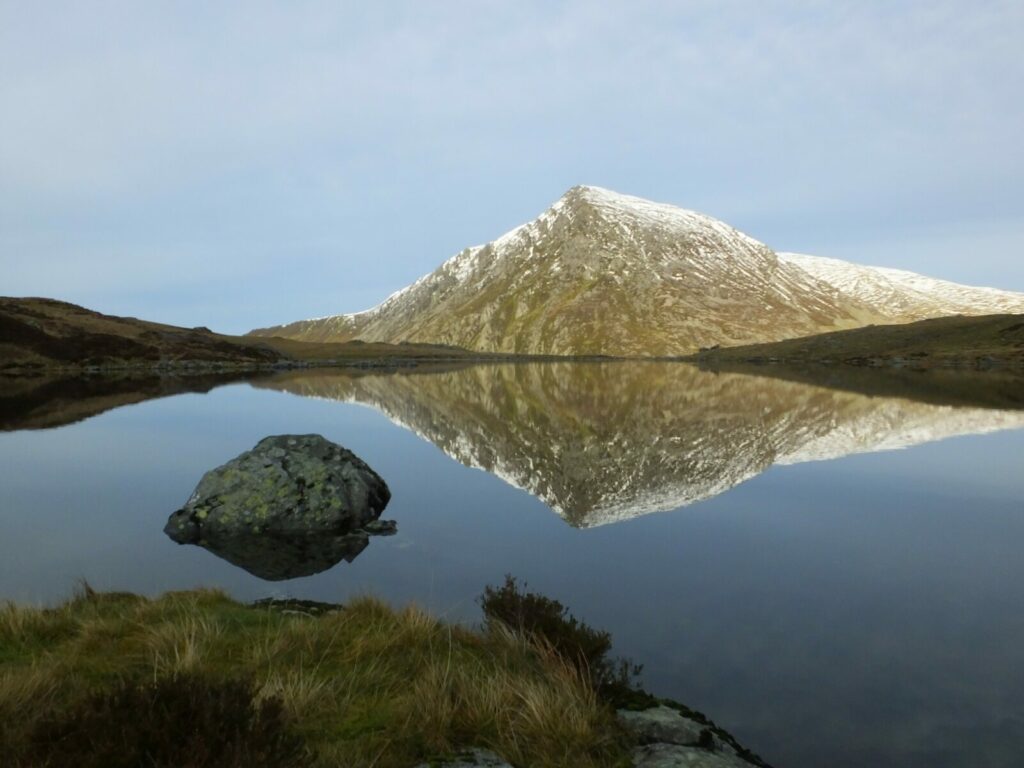
Cwm Idwal Nature Reserve
In 1954, Cwm Idwal was designated as Wales’ first national Nature Reserve, and today it…
Timeline
450 Million years ago Rocks of Cwm Idwal are formed Volcanic eruptions produce lava, ash…
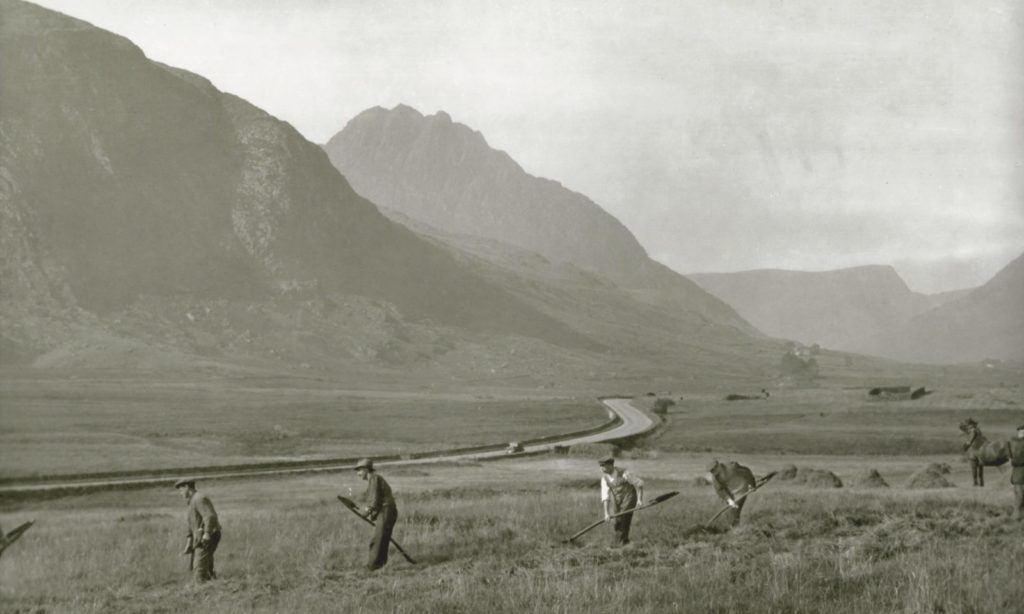
The People of Cwm Idwal
The impacts that people have had on the landscape of Cwm Idwal and the surrounding…